


The complete guide · 7 min read
Deadlock Server Hosting Explained: A Complete Guide
A careful guide to Deadlock in its early access period: what the game is, what Valve has made official, how in-client custom matches work, what a hosted server can and cannot promise, and how to stay on top of fast patches.
By Matthew Griffin, Owner, Gaming DeluxePublished · Updated
In this guide
- What Deadlock Is
- How Valve Is Developing Deadlock
- The Official Ways to Play With Your Group
- Standard Mode, Ranked Mode and Your Group
- The Map Rework and Why Patches Matter
- What a Hosted Deadlock Server Can and Cannot Promise
- A Sensible Patch Routine
- A Short Checklist Before You Order
- Slots, RAM and Choosing a Location
- What to Ask Any Host About Deadlock
- Deadlock Glossary
- Deadlock Help and Next Steps
What Deadlock Is
Deadlock is Valve's team game that combines third-person shooting with the structure of a MOBA. Its Steam tags include MOBA, Third-Person Shooter, Hero Shooter, Team-Based and Tactical. Teams push lanes with troopers, buy items from a shop, take on neutral camps and fight over objectives, all with heroes who each have their own guns and abilities.
In February 2025 Valve redesigned the map around three lanes instead of four, and the September 2026 City Never Sleeps update gave the map and its neutrals a large visual overhaul.
Most importantly for anyone thinking about a server, Deadlock is not finished. Valve's Steam page describes it as an early development build with lots of temporary art and experimental gameplay. There is no release date, only To be announced, and access is limited to friend invites via Valve's playtesters.
How Valve Is Developing Deadlock
Valve has chosen to build Deadlock in public. In its September 2026 development post the team explained that it sees putting the game in players' hands early as the best way to reduce the risk of making a multiplayer game, and to learn what is fun and what is not.
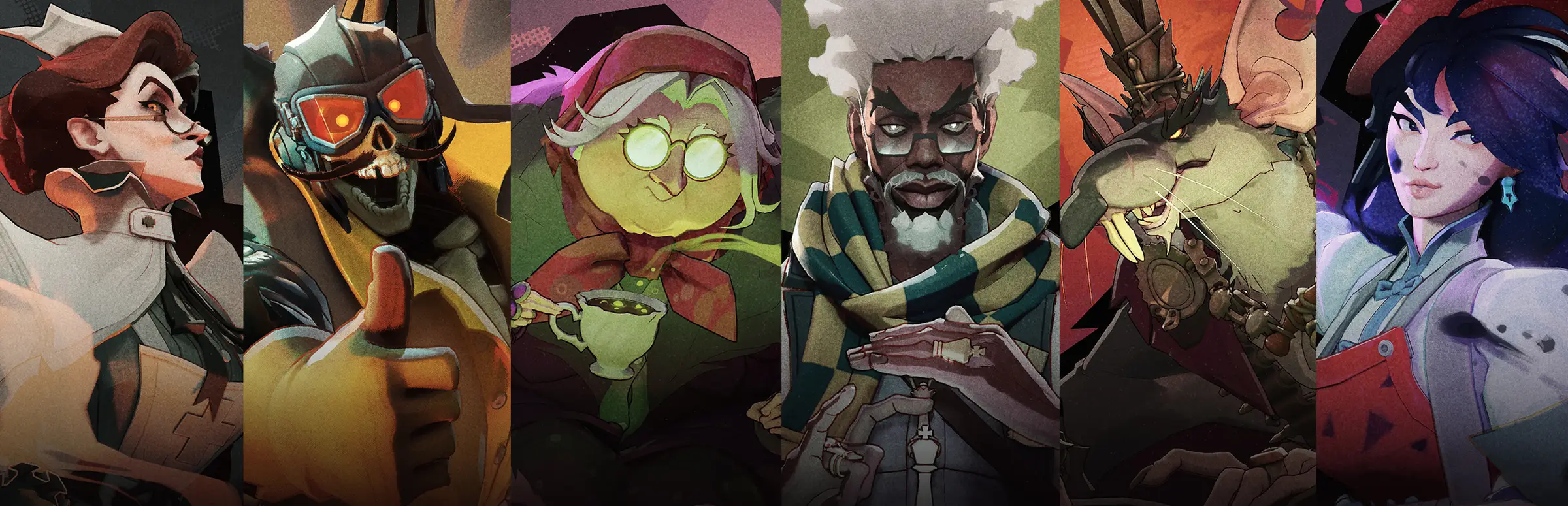
- Heroes by vote: recent updates added new heroes one at a time, with players voting on the order. City Never Sleeps added six this way, ending with Nurse Harrow on 20 October 2026.
- Systems still moving: Valve named progression and hero and hideout customisation as features it wants to keep adjusting before full release.
- Speculative ideas: large item redesigns and alternate game modes are being tested, and Valve says it is not sure yet whether they will ship.
- Known gaps: the Midboss, Guardians and Walkers are listed as important areas still to be worked on.
For a server owner this means one thing above all: expect change. Rules, heroes, items and even the map can shift between patches, and anything built around today's version may need rethinking after the next big update.
The Official Ways to Play With Your Group
Valve has built several ways to play with friends straight into the game client, and none of them needs a rented server.
| Option | What it is | Added or changed |
|---|---|---|
| Custom Matches | A private match you set up and share with a party code | Settings such as Enable Cheats and Bot Difficulty, February 2025 |
| Play Bot Match | Private or co-op games against bots | Grouped under one button, February 2025 |
| The Hideout | A pre-game lobby with a practice range | August 2025 |
| Sandbox | Hero practice, reachable from the Hideout or the Play menu | Renamed Hero Testing in places, February 2025 |
| Hero Labs | Usable in private lobbies, private bot games and sandbox | November 2024 |
Official matchmaking is handled by Valve. Its July 2026 Matchmaking Update split it into Standard Mode, which is unranked, and a new Ranked Mode, and described how the matchmaker builds balanced games. That is Valve's system, and a rented server does not change it.
Standard Mode, Ranked Mode and Your Group
Valve's Matchmaking Update of 30 July 2026 changed how most people play. Matchmaking now has two modes. Standard Mode is unranked, with no limits on party size or skill spread, and the matchmaker takes your experience with a hero into account. Ranked Mode is the competitive queue, played in seasons.
- Eligibility: Ranked needs at least 60 wins in Standard Mode.
- Hero pool: you can only pick heroes you have won at least 15 Standard games with, and you need at least 3 heroes unlocked.
- Calibration: each season starts with 8 calibration games, played without a party.
- Parties: Ranked allows solo or duo parties only, and duo partners must be close in Rank.
- Seasons: the first season ran to 7 October; Valve expects later seasons to be longer, with splits.
For a group of friends, this matters because the official queues are built around small parties. A bigger group that wants to play together, try odd hero line-ups or run an in-house night usually turns to Custom Matches and a shared party code instead. Those run through Valve's own systems, so check with us before assuming a rented server adds anything to them.
The Map Rework and Why Patches Matter
The Map Rework Update on 25 February 2025 is a good example of how far Deadlock can move in a single patch. Valve rebuilt the map around three lanes instead of four, which touched building layouts, pathways, neutral camps, air vents, power-up buffs and the mid boss. It also added an Explore Map option for running around an empty city, and changed how troopers give souls, so a player nearby no longer needs the last hit.
The same notes included server-side work: better accuracy and timing for lag compensation, and improved client reporting to stop incorrect prediction offsets. Changes like these are why we keep repeating the same advice on this page. Update promptly, take a snapshot before you do, and read the patch notes after every big release. A setup that worked well last month may need a fresh look after the next one.
What a Hosted Deadlock Server Can and Cannot Promise
We want to be clear here, because Deadlock is different from the finished games we host. Valve has not published official dedicated server documentation for Deadlock, either on its Steam page or in its update posts, at the time of writing. That means there is no official list of launch options, no stated player limit for servers and no Valve guidance on hosting.
- What we can promise: a 32 slot server with 8GB of RAM on 5.0GHz CPUs and NVMe storage, our full control panel, DDoS protection, backups and 24/7 support.
- What we cannot promise: any specific feature that Valve has not documented, or that a feature working today will still work after the next patch.
- What we suggest: tell us what you want to do before ordering, and use monthly billing so you are never locked in.
A Sensible Patch Routine
Deadlock receives frequent updates, from small fixes to large reworks such as City Never Sleeps. Staying on top of them is the main job of whoever looks after the server.
- Follow Valve's announcements on the Deadlock Steam news page so you know when a big update lands.
- Take a Backup Manager snapshot before updating.
- Run Steam Update in the panel, or let a scheduled automatic Steam update handle it overnight.
- Start the server and read the console and log for anything unusual.
- If something no longer behaves as before, restore the snapshot and contact our support team.
Automatic restarts and automatic Steam updates in Scheduled Tasks do most of this on their own, so the server is ready each evening without anyone logging in.
A Short Checklist Before You Order
Because Deadlock is still changing from one patch to the next, a few minutes of planning now saves a lot of frustration later. Work through these points with your group before you pay for anything.
- Confirm that everyone who will play already has access to Deadlock through a playtester invite.
- Write down what you want the server for, in plain words, and send it to our support team in a ticket.
- Wait for our answer on whether the current build supports it. If we are not sure, we will say so.
- Pick the location from the ping test, using the PCs your group actually plays on.
- Choose monthly billing to start with. You can switch to a longer cycle once you are happy.
- After the server is live, take a first Backup Manager snapshot so you always have a clean point to return to.
If the answer to step three is no, keep playing through Custom Matches in the game client, which costs nothing, and check back after Valve's next big update. We would much rather you come back later than order something that does not fit what you need today.
Slots, RAM and Choosing a Location
There is one Deadlock plan, with 32 slots and 8GB of RAM. Valve has given no memory figures for a server, and the client requirements on Steam still read TBD, so the 8GB is our own choice rather than an official number. The memory graph in the panel shows how much is actually used; tiers up to 32GB are on the order form if you need more.
Location matters more than raw hardware for a game with fast movement and close-range fights. Run the ping test to each of our 9 locations from the PCs your group plays on, and choose the one with the lowest result for most of them. Every location costs the same.
What to Ask Any Host About Deadlock
With an unfinished game, the right questions matter more than the spec sheet.
- What exactly is supported today?Ask what the server can do on the current build, and how the host knows. Be wary of promises Valve itself has not made.
- Can you leave easily?Monthly billing without a minimum term protects you if the game changes direction.
- How fast can you update?Check that you can update the server yourself the moment Valve ships a patch.
- Ping to your groupTest latency from your own PCs before choosing a location.
- Support before you buyA good host answers questions before taking your money.
Deadlock Glossary
- Early development build
- Valve's description of Deadlock on Steam: unfinished, with temporary art and experimental gameplay.
- Playtester invite
- How players currently get access: a friend invite from someone who already plays.
- Custom Match
- A private match created in the game client and joined with a party code.
- Party code
- The code a match creator shares so friends can join a Custom Match.
- The Hideout
- The pre-game lobby added in August 2025, with a practice range.
- Troopers
- The computer-controlled units that push down each lane.
- Walkers and Guardians
- Objective structures named in Valve's patch notes that teams must bring down.
- City Never Sleeps
- Valve's September 2026 update with a map overhaul and six new heroes.
Deadlock Help and Next Steps
Official pages and our own help.
How this page was put together: game facts come only from Valve's Steam store page and Valve's Deadlock update posts on Steam; where Valve has said nothing, we say so instead of guessing. Drafted with AI assistance, checked against our live order form for the plan, price and locations, and reviewed by Matthew Griffin before publishing. If Valve publishes server documentation, we will update this page. Something out of date? Tell us.
Sources, checked 21 October 2026:
- Deadlock on Steam (app 1422450), Valve
- City Never Sleeps and development update, 29 September 2026, Valve on Steam
- Shh... This Won't Hurt a Bit (Nurse Harrow), 20 October 2026, Valve on Steam
- Map Rework Update, 25 February 2025 (three lanes, Custom Matches), Valve on Steam
- Six New Heroes (The Hideout), 18 August 2025, Valve on Steam
- 11-07-2024 Update (Hero Labs in private lobbies), Valve on Steam
- Matchmaking Update, 30 July 2026 (Standard and Ranked modes), Valve on Steam
- Deadlock official site, Valve (page needs JavaScript; automated reads return only the title)
- Gaming Deluxe order form, Deadlock Dedicated Game Server